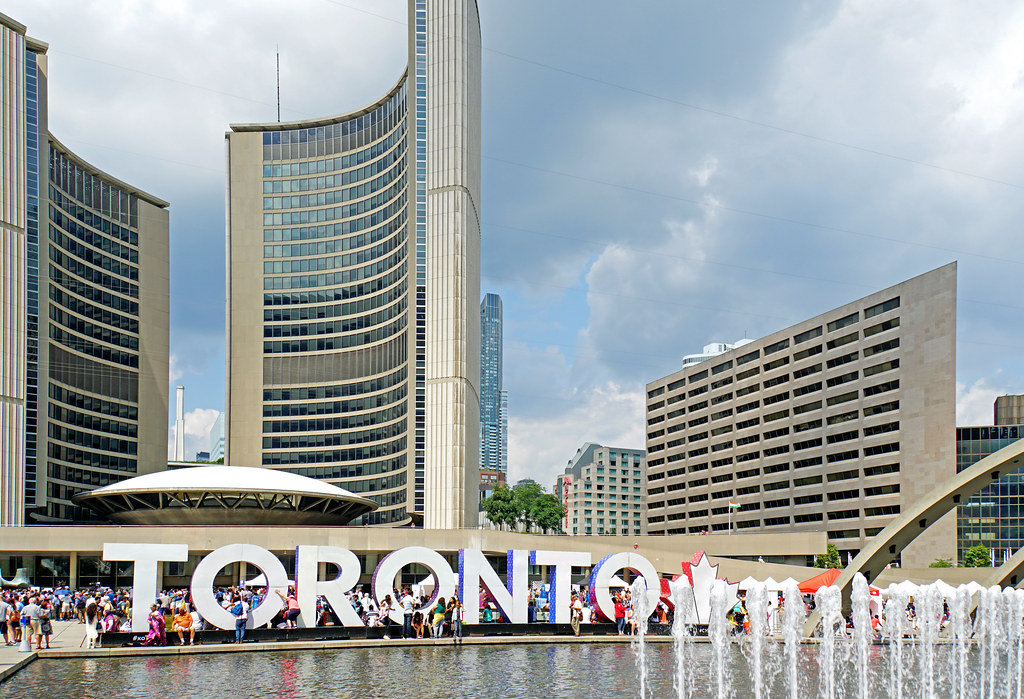
Toronto's AI Sector Grows Differently Than Silicon Valley
The city prioritizes inclusivity and regulatory trust over venture capital speed, reshaping how Canadian tech tackles artificial intelligence.
The city prioritizes inclusivity and regulatory trust over venture capital speed, reshaping how Canadian tech tackles artificial intelligence.

Listen to this article · 3:55
Walk through the King West corridor on any given Tuesday, and you'll spot founders huddled in coffee shops debating machine learning models alongside established bank executives. This collision of startups and institutional capital is becoming Toronto's signature in the global AI race-and it's fundamentally different from what's happening in San Francisco or New York.
Toronto's AI advantage isn't flashy venture capital or celebrity founders. It's something quieter but potentially more durable: a ecosystem where cutting-edge AI research, regulatory credibility, and diverse talent pools converge naturally. The University of Toronto's Vector Institute has become a quiet powerhouse in AI research, attracting international researchers and spawning companies like Cohere, which raised $125 million to build enterprise AI tools. Yet unlike Valley darlings, these founders operate within a framework of public trust-something Canadian institutions, including regulators, have cultivated carefully.
The numbers tell part of the story. Toronto's tech sector generated over $45 billion in annual revenue by 2025, with AI and machine learning companies representing the fastest-growing subset. But scale alone doesn't explain the city's distinctiveness. Rather, it's the deliberate architecture: banks like RBC and TD, headquartered in downtown Toronto, are integrating AI into operations through partnerships with local startups rather than purely acquiring external talent. This creates a feedback loop that keeps innovation rooted locally.
Geography matters too. Toronto sits at the nexus of North American regulatory frameworks while remaining outside the polarized tech culture wars dominating U.S. discourse. Companies building AI solutions for regulated industries-finance, healthcare, government-find Toronto attractive precisely because Canadian institutional caution has become a competitive advantage. Clients trust the governance structures here.
The talent pipeline reinforces this. Toronto's multicultural character-nearly 50 percent of residents born outside Canada-creates a recruitment advantage for companies building AI systems designed for global audiences. When your engineering team reflects dozens of languages and cultural perspectives, bias detection in AI models isn't just an ethical concern; it's embedded in how you work.
By mid-2026, Toronto hosts more AI researchers per capita than most North American cities outside Boston. The MaRS Discovery District in downtown Toronto functions as an informal headquarters for this cohort, while the Distillery District has emerged as an unlikely hub for AI-focused creative agencies.
As geopolitical competition over AI intensifies, Toronto is positioning itself not as a replica of American tech hubs, but as an alternative-one where innovation flourishes within stronger regulatory frameworks and community accountability. That's proving to be its own kind of moat.
This article was compiled by AI and screened before publishing. See our editorial standards.
How does this story make you feel?
Spread the word
About this article
Published by The Daily Toronto
Daily brief
Free, in your inbox before 7am. Weekdays.
More in tech