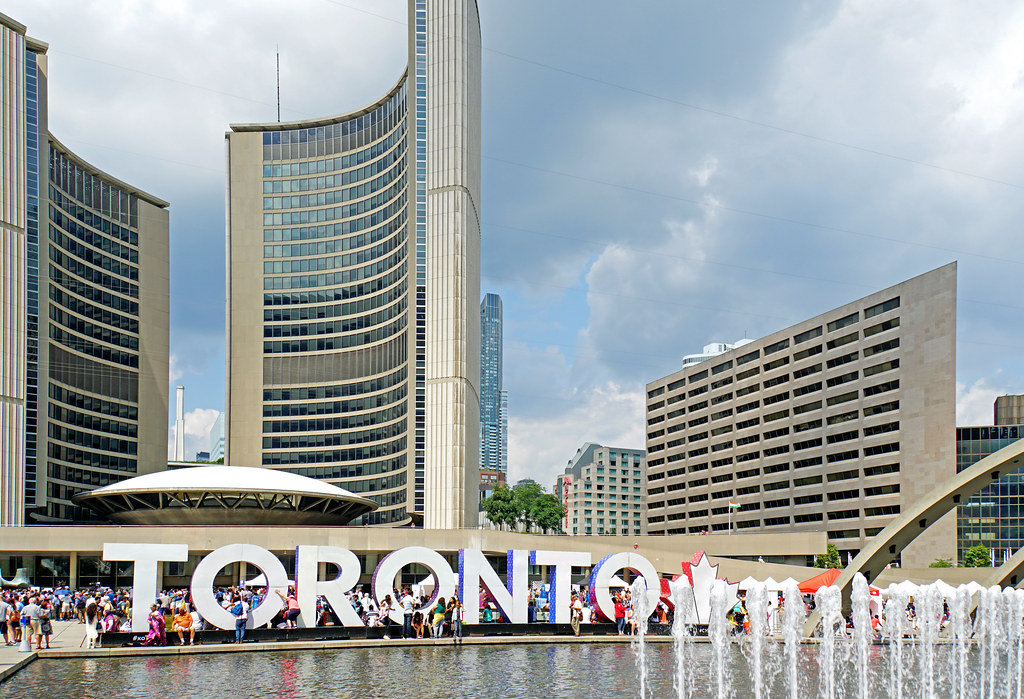
Toronto's Tech Scene Pivots: AI Talent Wars and Real Estate Crunch Define Summer 2026
As major players consolidate operations and startups flee rising costs, the city's innovation ecosystem faces a critical inflection point.
As major players consolidate operations and startups flee rising costs, the city's innovation ecosystem faces a critical inflection point.

Toronto's vaunted tech corridor is experiencing a summer reckoning. Six months into 2026, the city's startup and innovation landscape shows signs of maturation-and strain-as rising commercial real estate costs, talent exodus to the United States, and AI consolidation reshape the competitive dynamics that once made King West and the Discovery District hotbeds of venture activity.
The numbers tell a sobering story. Commercial office space in downtown Toronto's prime tech neighbourhoods has climbed to an average of $28 per square foot annually, a 22 percent increase since early 2024. Startups that rode the pandemic-era remote work boom are now grappling with decisions about physical presence at a time when San Francisco and Seattle are actively courting Canadian technical talent with stock options and warmer weather.
"We're seeing a bifurcation," says a spokesperson from the Toronto Innovation Institute, which tracks the local ecosystem. The well-funded AI and enterprise software companies-clustered around the MaRS Discovery District and extending east toward the Distillery District-are doubling down, snapping up adjacent office space and investing in talent retention. Meanwhile, earlier-stage founders in sectors like fintech, climate tech, and healthtech are increasingly exploring remote-first models or relocating operations to smaller Canadian cities with lower overhead.
Yet there are counterintuitive bright spots. The city's post-secondary institutions-particularly University of Toronto's computer science program and Ryerson's engineering faculty-continue to produce world-class talent at scale. Recent graduates are launching ventures at record rates, with the Vector Institute reporting that AI researcher spinoffs have created seventeen new companies in the past eighteen months alone.
Venture capital inflows to Toronto startups totalled $847 million in the first half of 2026, down from $1.2 billion in the same period last year. But depth matters as much as volume. Several mega-rounds-including a $180 million Series C for an autonomous vehicle company headquartered in North York-suggest that investor confidence in Toronto's ability to scale deep-tech companies remains intact.
The city's competitive advantage, observers argue, lies not in being cheaper than Silicon Valley but in being distinctive. Its multicultural workforce, proximity to major North American markets, and lower regulatory friction than the US have created an underrated advantage for companies targeting enterprise clients across North America.
As summer progresses, the question hanging over Toronto's tech community isn't whether the city remains relevant-it does-but whether it can retain the momentum that made it Canada's undisputed innovation capital.
This article was compiled by AI and screened before publishing. See our editorial standards.
How does this story make you feel?
Spread the word
About this article
Published by The Daily Toronto
Daily brief
Free, in your inbox before 7am. Weekdays.
More in tech