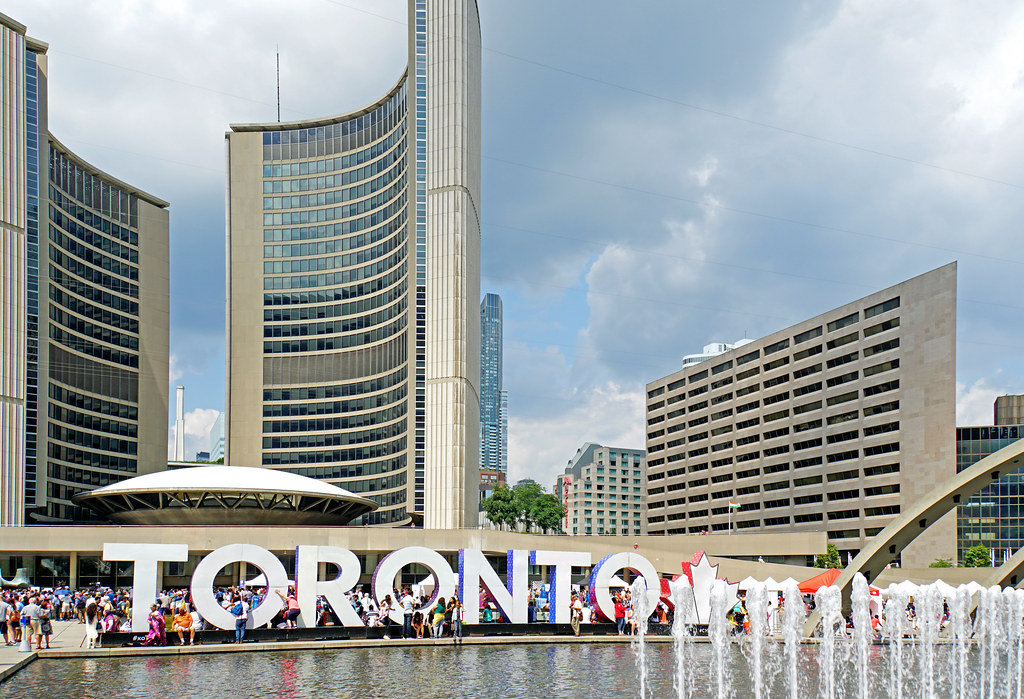
Toronto's Tech Hub Attracts Global Innovators Over Silicon Valley
A potent mix of talent retention, cross-sector collaboration, and regulatory openness is positioning Toronto as a rival to Silicon Valley-without the burnout.
A potent mix of talent retention, cross-sector collaboration, and regulatory openness is positioning Toronto as a rival to Silicon Valley-without the burnout.

While San Francisco grapples with office vacancies and talent exodus, Toronto's tech corridor is humming. The city has quietly assembled something Silicon Valley struggles to replicate: a genuinely interdisciplinary innovation ecosystem where fintech founders collaborate with healthcare technologists, AI researchers partner with climate-tech startups, and newcomers find both opportunity and stability.
The numbers tell part of the story. Toronto now hosts over 4,000 tech companies employing roughly 290,000 people-a 40 percent increase since 2019. Venture capital investment topped $2.8 billion last year, making it Canada's undisputed funding capital. But metrics alone don't explain why companies like Shopify, Wealthsimple, and DJI have chosen to deepen their Toronto roots rather than flee to costlier American hubs.
Geography matters. The emerging innovation corridor stretching from the MaRS Discovery District near College Street through the Entertainment District and down to the Waterfront-spanning roughly two kilometres-creates what urban planners call "productive proximity." Unlike Silicon Valley's sprawl, Toronto's walkable neighbourhoods mean founders, engineers, and investors collide naturally. Coffee at Kawa Espresso Bar on King West turns into a partnership discussion. A panel at the DMZ accelerator in the Ryerson campus building catalyzes a funding round.
But the real distinctive advantage is cultural. Toronto's tech scene remains remarkably unglamorous. Founder burnout is discussed openly, not celebrated. Work-life balance isn't viewed as weakness. The city's diversity-nearly 51 percent of residents born outside Canada-means product teams inherently build for global audiences from day one. An AI startup founded by engineers from seven countries selling to markets in fifteen more feels unremarkable here.
Regulatory environment plays an understated role. Canadian privacy laws are among the world's strictest, making Toronto an ideal test bed for compliant products. The federal government's AI Bill of Rights framework, still in development, is being shaped partly by Toronto-based researchers, giving local companies early-mover advantage on governance.
Perhaps most crucially, Toronto offers what Silicon Valley increasingly cannot: affordability paired with ambition. A software engineer earning $150,000 in Toronto lives in a different reality than their San Francisco counterpart. That economics attracts talent seeking to actually build wealth, not just participate in hype cycles.
As geopolitical tensions reshape global tech supply chains, Toronto's position as a stable, English-speaking, immigrant-friendly jurisdiction adjacent to American markets looks increasingly prescient. The city isn't trying to become the next Silicon Valley. It's becoming something arguably better: a place where serious people build serious companies.
This article was compiled by AI and screened before publishing. See our editorial standards.
How does this story make you feel?
Spread the word
About this article
Published by The Daily Toronto
Daily brief
Free, in your inbox before 7am. Weekdays.
More in tech