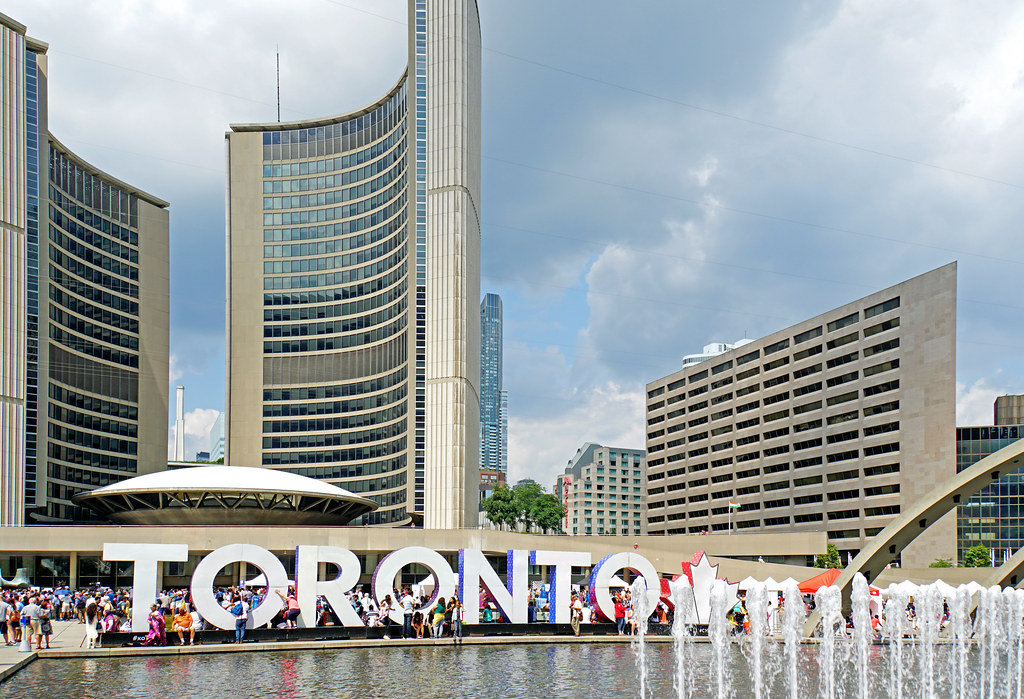
Walk through the cobblestone laneways of King West on any given Tuesday and you'll encounter the beating heart of Canada's tech ambition. But what makes Toronto's startup ecosystem genuinely distinctive isn't just the density of glass-fronted offices or the venture capitalists clustering around Espresso Royale. It's something more fundamental: a convergence of geographic, demographic, and regulatory advantages that few global cities can claim simultaneously.
The numbers tell part of the story. Toronto attracted $2.8 billion in venture capital funding in 2025, maintaining its position as Canada's undisputed startup capital. But context matters more than raw figures. Unlike Silicon Valley, where housing costs routinely exceed $2 million for modest homes, Toronto developers still construct office space and condos in neighbourhoods like Liberty Village and King West at prices that allow early-stage founders to actually survive their first scaling phase. A junior engineer here commands roughly 30 percent lower salary expectations than comparable San Francisco counterparts, yet brings comparable talent calibre.
The talent advantage runs deeper than compensation economics. Toronto's public school system and institutions like the University of Toronto, Ryerson, and York University produce 50,000+ graduates annually in technology, mathematics, and engineering disciplines. Critically, many remain in the city. But the real differentiator is diaspora networks. Roughly 40 percent of Toronto's population is foreign-born, creating natural bridges to markets across India, China, Southeast Asia, and Latin America-geographies that Silicon Valley founders often struggle to navigate without external advisors.
Waterfront Innovation District projects along Queens Quay have accelerated this. When major firms like Google, Microsoft, and Shopify established regional hubs in Toronto over the past five years, they didn't just bring capital-they created exit pathways that attracted ambitious founders. A successful exit to an American multinational no longer requires relocating.
Regulatory environment matters too. Toronto startups benefit from Canadian immigration policies favouring tech talent, federal R&D tax credits worth up to 35 percent on eligible expenses, and a legal framework around data privacy and AI governance that increasingly serves as a template globally. European founders are beginning to view Toronto as a testing ground for compliance before European expansion.
None of this guarantees success. Toronto startups still face the fundamental challenge of raising Series B and C funding, with many founders eventually pursuing American institutional capital. But the ecosystem's openness to outsiders, talent availability, and strategic geographic positioning between North American and emerging markets create conditions that San Francisco, London, and Singapore find genuinely difficult to replicate. That's not hype. That's competitive advantage.
This article was compiled by AI and screened before publishing. See our editorial standards.