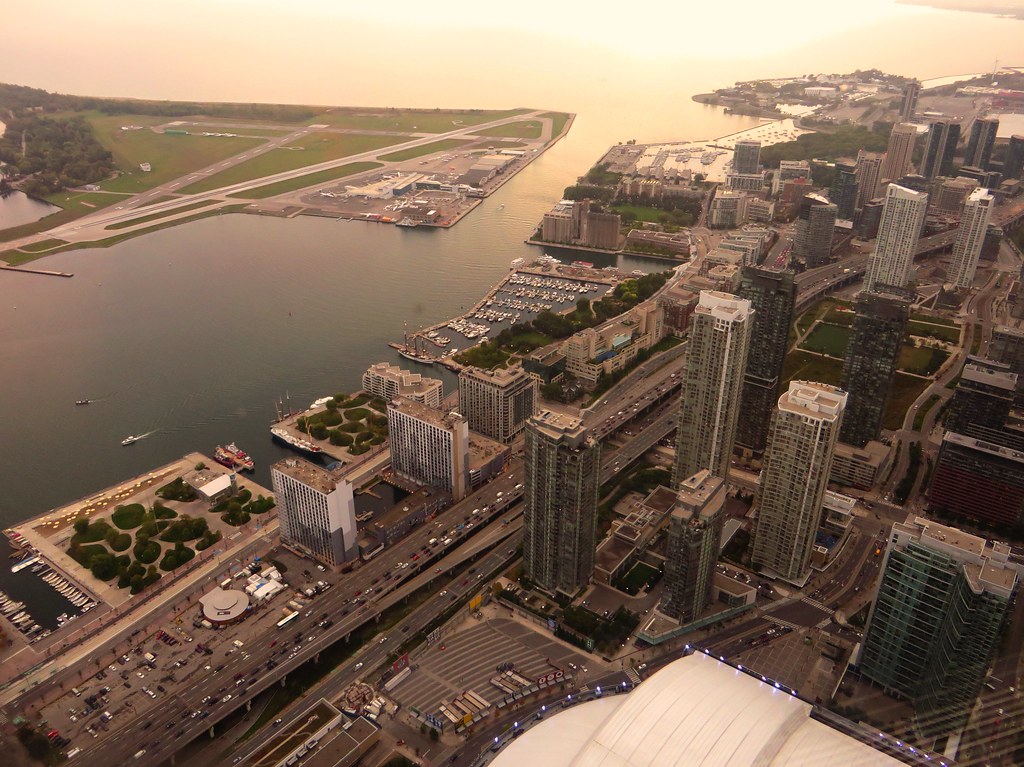
Toronto's culture calendar for July 3rd reads like a greatest-hits compilation of the city's creative evolution. The Power Plant Contemporary Art Centre is running its summer exhibition in Harbourfront, the same waterfront strip that transformed from industrial docks into a cultural destination in the 1970s. The Distillery District in the south end hosts live performances in its Victorian-era courtyards. Meanwhile, the newly revitalized TIFF Bell Lightbox on King Street West continues programming that would have seemed unthinkable to the city's mid-century arts establishment.
Understanding what's on today requires understanding how we got here. Toronto's cultural infrastructure didn't emerge from nowhere. The city spent decades building the scaffolding that now supports one of North America's most active arts scenes. That history shapes where you can actually go and what you can see right now, on an ordinary summer Friday.
From Industrial Port to Entertainment Hub
Start in St. Lawrence, the neighbourhood bounded by Front, Parliament, and King Streets, where Toronto's original galleries opened in converted storefronts during the 1960s and 1970s. The Grange, a historic mansion on McCaul Street, became the kernel of what grew into the Art Gallery of Ontario. That decision-to anchor serious visual arts in a specific neighbourhood-created a gravity well. Today, you can walk from the AGO's contemporary wing into smaller commercial galleries that wouldn't exist without that original institution's presence.
Harbourfront represents a different kind of conversion story. In 1972, the city acquired 10 acres of derelict waterfront property. By 1974, Harbourfront Centre opened. Today it hosts 2,000-plus events annually, drawing roughly 12 million visitors. The Power Plant itself opened there in 1987 as a nonprofit contemporary art space. Summer programming this week includes live music at the outdoor Harbour Stage-free to the public-and multiple gallery exhibitions spread across the grounds.
King West's transformation tells yet another story. The theatre district that now includes TIFF Bell Lightbox, the Royal Alexandra Theatre (which opened in 1907), and the Princess of Wales Theatre (built in 1993) emerged from decades of investment in live performance. The Royal Alex alone hosts roughly 800,000 attendees annually across its programming.
The Numbers Behind Today's Scene
Toronto allocated $63.1 million toward cultural services in its 2026 operating budget, up from $58.9 million the previous year. The city counts 64 museums and galleries, 35 theatre companies, and dozens of independent performance spaces. Ticket prices vary wildly-the AGO charges $20.99 for general admission, while smaller galleries in areas like West Queen West charge nothing for walk-ins.
That budget reflects a city that learned something from its mid-20th century growing pains. Before the 1970s, Toronto had a reputation as culturally conservative, its arts scene underfunded relative to Montreal or New York. The deliberate infrastructure investments that followed-particularly the creation of Harbourfront and the expansion of museum programming-changed the city's trajectory. You see that today in the density of options available on any given summer evening.
If you're heading out today, the Distillery District offers guided tours of its 44 Victorian-era buildings, most converted into galleries and performance spaces since the site closed as an active distillery in 1990. The Art Gallery of Ontario has extended hours until 9 p.m. The Princess of Wales Theatre on King Street West runs a full summer schedule. The Beach Cinemas, an independent theatre on Queen Street East, screens films that Toronto's multiplex chains won't touch.
None of these venues existed in their current form 50 years ago. Most were preceded by something else-industrial buildings, defunct entertainment venues, empty lots. What makes Toronto's cultural calendar feel full today is the result of deliberate choices made across decades to preserve, convert, and invest in spaces that could become permanent fixtures. That infrastructure doesn't disappear overnight. It shapes what you can actually do on a July evening in the city, which means understanding the past isn't just historical trivia-it explains your actual options right now.