Toronto's Summer Festival Circuit Shows How a City Learned to Party Like Itself
This weekend's events reveal how three decades of cultural programming transformed Toronto from a cautious, fragmented city into one that celebrates its own complexity.
This weekend's events reveal how three decades of cultural programming transformed Toronto from a cautious, fragmented city into one that celebrates its own complexity.

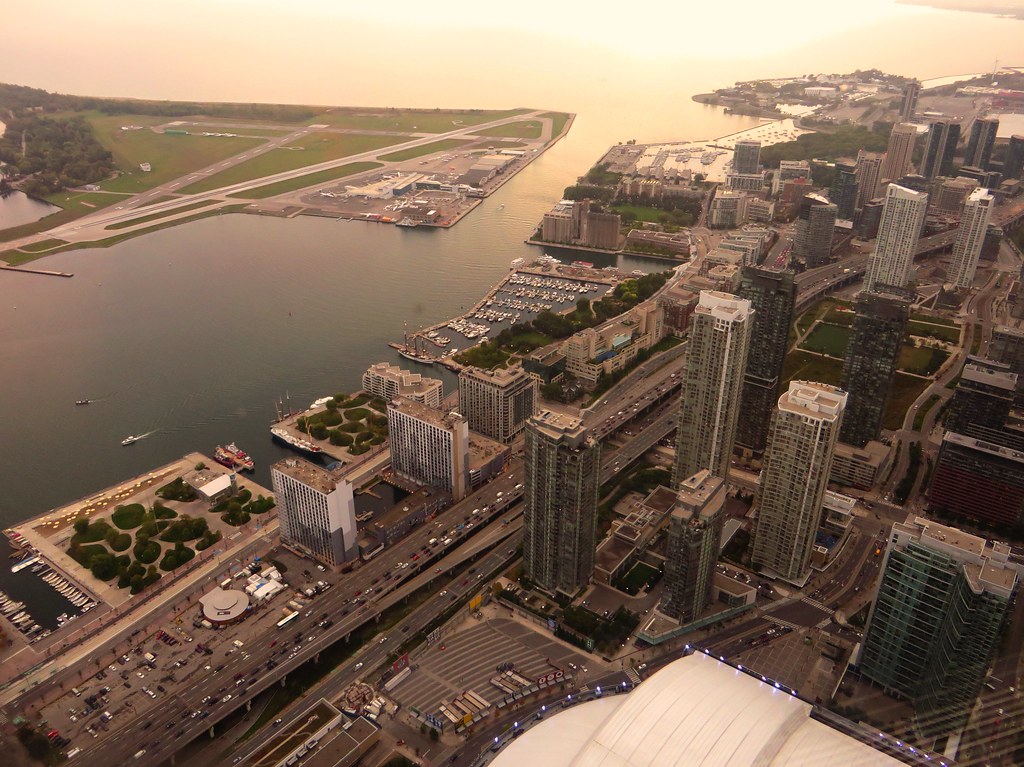
Toronto's event calendar this weekend reads like a greatest-hits album of a city that finally figured out who it was. The Distillery District hosts its annual Jazz Festival opening, Scotiabank Arena will draw thousands for the Canadian Music Week afterparties that spill into King West, and across the east end, Pride Week preparations are hitting full swing on Church Street-all happening simultaneously in neighbourhoods that, in the 1990s, barely spoke to each other.
This convergence matters now because it marks something that older Torontonians remember as impossible: a weekend where multiple cultural communities hold major events without competing for resources, media attention, or permission. The city spent decades apologizing for its diversity. Now it monetizes it. That shift didn't happen by accident. It happened because venue operators, nonprofit arts groups, and City Hall eventually stopped asking which community deserved the spotlight and started building enough stages for everyone.
The Distillery District-the 45-acre former Gooderham and Worts grounds on Mill Street-didn't even exist as a public cultural venue until 2003. Before that, Toronto's summer programming was scattered across competing spheres: the Toronto International Film Festival in September, SummerWorks Theatre in August on King West, Caribbean festivals in specific corners of the city. "You had audiences that rarely crossed over," said one longtime arts programmer who worked the circuit in the 1980s and 1990s. The Distillery changed the math by offering a single location large enough to host multiple genres-jazz, theatre, film, markets-without requiring artists to choose between visibility and artistic integrity.
The Scotiabank Arena, opened in 1999 as the Air Canada Centre, served a similar function for popular music. Before then, touring acts either played the SkyDome (now Rogers Centre) or the Molson Amphitheatre (now Budweiser Stage), both venues that treated Toronto as a secondary market after Montreal or Vancouver. The 19,800-seat arena created space for mid-tier artists to draw crowds of 10,000 to 15,000 people-exactly the size that allowed local promoters to build sustainable businesses.
The Pride programming on Church Street tells a different story. What began in the 1980s as an underground week of church basement gatherings and bar crawls became a municipally recognized festival by 2000. City Council formally recognized Pride Week in 2000, two years before marriage equality became law in Ontario. The infrastructure followed the political recognition: dedicated funding, street closures, partnering with local businesses like the Glad Day Bookshop (operating since 1979) and the 519 Community Centre on Spadina Avenue, which began offering free programming alongside paid ticketed events.
Toronto's cultural economy generated $11.7 billion in economic output in 2022, according to a report by the Toronto Arts Foundation. Weekend festivals and events account for roughly 18 percent of that figure, though that number has grown steadily since 2010 when it was just under 12 percent. The Distillery District alone drew 4.2 million visitors last year; the Jazz Festival runs for 10 days and expects 60,000 attendees. Ticket prices have climbed accordingly-main-stage jazz events run $35 to $65, up from an average of $18 in 2008.
What's shifted is the audience expectation that all these things can happen at once. Thirty years ago, a major cultural event required a city to pause and reorganize itself. Now Toronto runs six simultaneous festival weekends across different neighbourhoods without anyone treating it as unusual. The infrastructure-the transit connections, the hotel capacity, the food vendors, the volunteer networks-evolved to support it. Spadina and Bathurst, historically working-class neighbourhoods with lower commercial rents, became entertainment corridors because they had room to grow.
If you're heading out this weekend, the practical math is straightforward: the Distillery is accessible via the 504 King streetcar; Scotiabank Arena sits a block from Union Station; Church Street is a short walk from Dundas station. None of this existed in functional form before 2000. Arrive early, expect crowds, and remember you're watching a city's infrastructure actually working the way planners intended.
How does this story make you feel?
Spread the word
About this article
Published by The Daily Toronto
Daily brief
Free, in your inbox before 7am. Weekdays.
More in culture