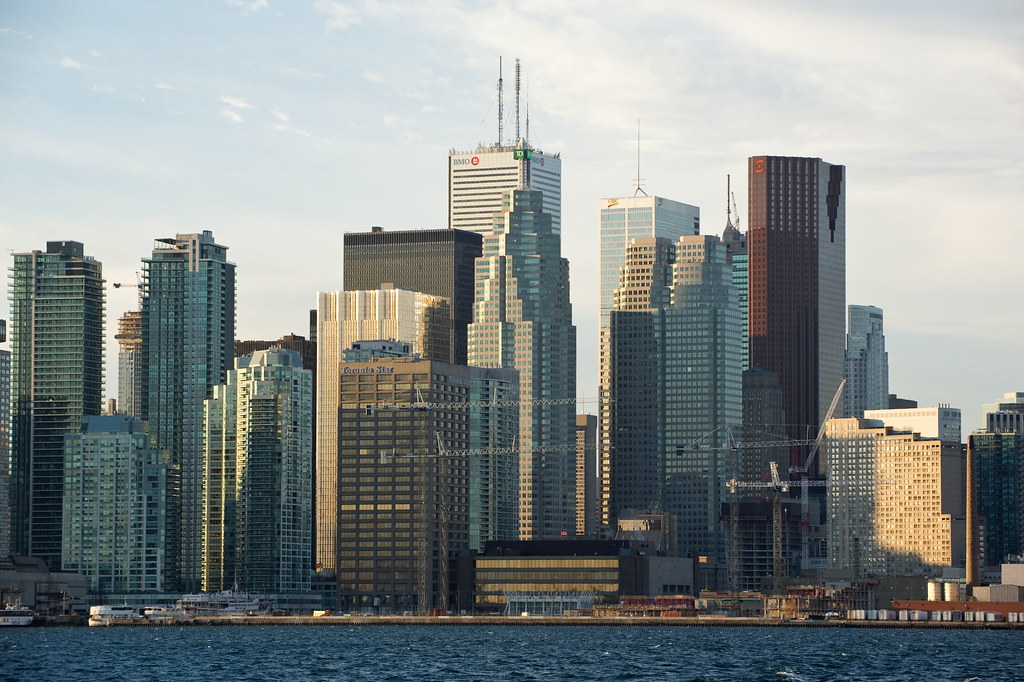
Toronto Sees 10% Quarterly Price Growth, Outpacing Last Year's Numbers
A closer look at the city's real estate market reveals a significant surge in prices, with some neighbourhoods experiencing even higher growth rates.
A closer look at the city's real estate market reveals a significant surge in prices, with some neighbourhoods experiencing even higher growth rates.

Toronto's real estate market has seen a 10% increase in quarterly price growth, surpassing the same time last year. This surge in prices is a significant indicator of the city's continued demand for housing, despite global economic uncertainties.
The current market trends are particularly relevant now, as the city's population continues to grow due to high immigration rates. The Toronto Regional Real Estate Board reported that the average price of a home in the city has reached CAD 1.1 million, with downtown condos selling for CAD 700,000 or more. Midtown and the Annex are experiencing a premium, while the East End is seeing a rise in popularity, driven by its affordability and accessibility.
In specific neighbourhoods, such as Riverdale and Leslieville, prices have increased by as much as 15% compared to the same time last year. The popular Queen Street East and King Street West are also seeing significant growth, with new developments and businesses popping up along these corridors. Organisations like the Toronto Transit Commission and the City of Toronto's Affordable Housing Office are working to address the city's housing needs, with initiatives like the Housing Now program and the upcoming Ontario Line subway expansion.
A review of the data reveals that the average price of a detached home in Toronto has increased to CAD 1.3 million, up from CAD 1.1 million at the same time last year. Semi-detached homes are selling for an average of CAD 1.1 million, while condos are going for CAD 700,000 or more. According to the Toronto Regional Real Estate Board, sales volumes are up 5% compared to the same time last year, with 12,000 homes sold in the second quarter of 2026. The board also reported that the average days on market has decreased to 20 days, down from 25 days at the same time last year.
As the market continues to evolve, it's essential for buyers and sellers to stay informed about the latest trends and developments. With the city's population projected to continue growing, it's likely that prices will remain competitive. Buyers should be prepared to act quickly, while sellers should be aware of the shifting market conditions. The upcoming months will be crucial in determining the trajectory of the market, and all eyes will be on the Toronto real estate market as it navigates the challenges and opportunities of 2026.
How does this story make you feel?
Spread the word
About this article
Published by The Daily Toronto
Daily brief
Free, in your inbox before 7am. Weekdays.
More in Property